Why We’re Never Satisfied With How We Look
- And what’s really underneath it.
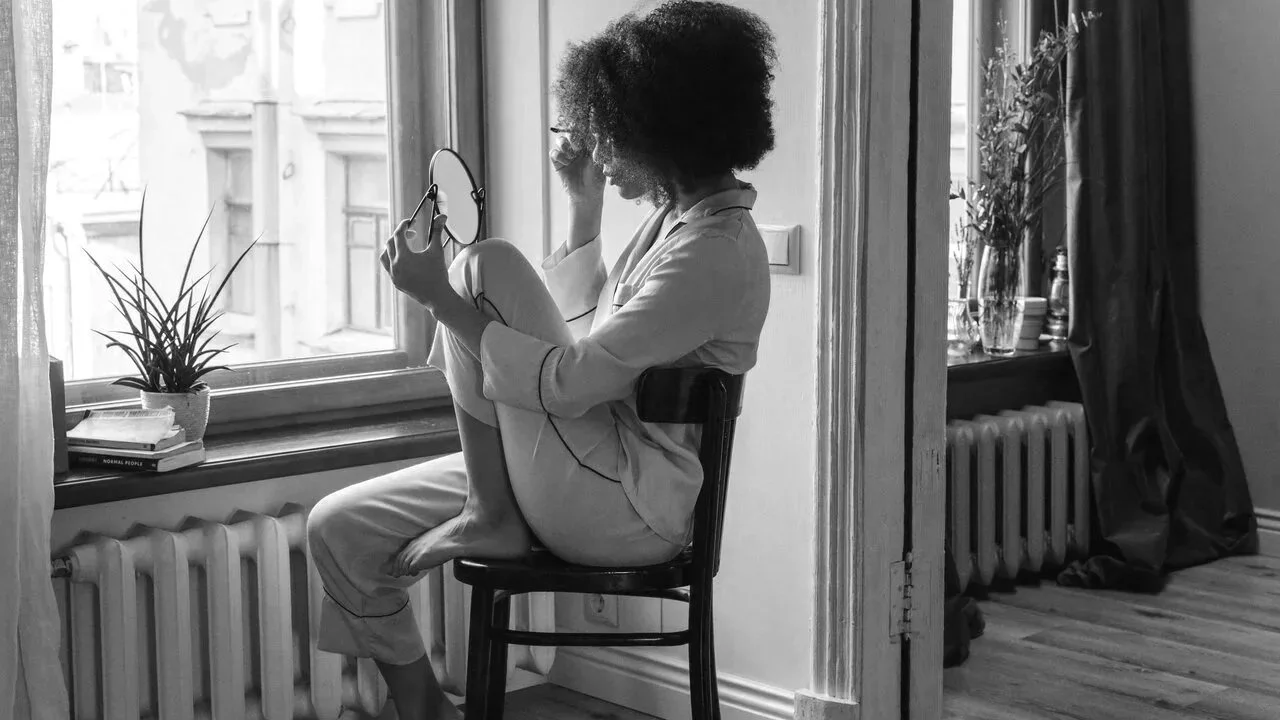
You get ready. You check the mirror once, then again. Something feels off, though you can’t always say exactly what. You adjust, retake the photo, choose a different angle — and even then, there’s a small voice that isn’t quite convinced.
This isn’t vanity. It’s not really even about the mirror. For most people, it’s about something far more relentless: an internal sense of comparison that never quite switches off.
It’s not just you — and it’s not just in your head
Body dissatisfaction has always existed to some degree. But its scale and intensity today are different, and the research increasingly points to one major factor: social media.
Global social media users now exceed 5.2 billion. We’re all exposed to more images of bodies than ever before — and more versions of bodies than ever before, thanks to editing and filters.
The mechanism is well understood. Media, parents, and peers all influence how we see our bodies — mainly through social comparison. And social comparison is the main link between social media use and body dissatisfaction.
In plain terms: it’s not just seeing other bodies that causes harm. It’s the automatic act of comparing your own to them, repeatedly, often without even registering you’re doing it.
A 2025 meta-analysis confirmed this directly, finding that high social media use is associated with a greater tendency to compare oneself with others, which in turn may heighten body image concerns and problematic eating behaviours.
The filter problem
There’s a specific, modern twist on this that’s worth naming directly. Researchers have observed a pattern they call “Snapchat Dysmorphia,” where people want to surgically alter their features to resemble heavily filtered selfies.
Think about what that actually means: people are now comparing themselves not to other real humans, but to filtered, edited versions of themselves and others that were never accurate to begin with.
The comparison was rigged before it even started — measuring yourself against a standard that isn’t real, created by software, not biology.
For many people, this creates a very specific feeling:
looking at their face and feeling it’s “wrong,”
wanting to edit themselves to match a filter,
feeling like their real face doesn’t look like the one they know.
Algorithms compound this further by creating “echo chambers” that intensify symptoms and direct increasingly toxic content — so the more you look, the more of exactly this content you’re shown, in a loop with no natural end point.
Why even changing your body doesn’t always change the feeling
This is the part that surprises people most, and it’s worth being honest about: surgery, no matter how skillfully done, doesn’t reliably fix the underlying distress.
This isn’t a moral judgment about anyone’s choice to have cosmetic work done. It’s simply what the pattern often shows. If the dissatisfaction is rooted in a belief — I am not acceptable as I am — rather than in the physical feature itself, then changing the feature doesn’t touch the belief. The mind that was dissatisfied before the procedure usually finds something new to focus on afterward, because the lens it’s looking through hasn’t changed, only the subject in front of it has.
This is consistent with how body dysmorphia is understood clinically: it isn’t usually resolved by changing the body, because it’s a condition that makes people fixate on what they perceive are flaws in their appearance — and the fixation itself is the issue, not any single feature it’s currently attached to. Cosmetic procedures driven by social-media-fuelled comparison can offer temporary relief, but if the root belief hasn’t shifted, the underlying dissatisfaction tends to simply relocate to a different feature.
For many people, checking, editing, retaking, and re-angling has become a habit loop that feels almost compulsive. It’s not vanity — it’s a nervous system that has learned to keep score on appearance, and now does it automatically, without you even noticing you’re doing it.
This is precisely why the most lasting work happens at the level of belief, not appearance.
Why “just stop comparing yourself” doesn’t work
If you’ve tried to simply will yourself out of this, you’ve likely found it doesn’t hold. That’s because the comparison isn’t really a conscious decision you’re making and could simply choose to stop. It’s a learned response — for many people, one that started long before social media existed at all, in a childhood moment, a comment, or an environment where appearance was tied to worth, safety, or belonging.
Social media didn’t necessarily create the underlying belief that how you look determines your value. For many people, it found a belief that was already there, and gave it an endless, highly efficient stream of new material to feed on.
What actually helps
This is why simply reducing screen time, while sensible, rarely resolves body image distress on its own — because it addresses the trigger, not the root belief the trigger is activating. The deeper question is usually: when did you first learn that how you look determines whether you’re acceptable, loveable, or safe?
In RTT hypnotherapy, we go back to that original moment — often one your conscious mind has long since filed away — and help your subconscious update the belief that formed there. The goal isn’t to convince you that you look a certain way through willpower or affirmations. It’s to remove the original reason your nervous system started keeping score on your appearance in the first place.
When that changes, you notice:
photos feel less threatening
mirrors feel less charged
compliments about appearance land more easily
the urge to edit or retake photos fades
You weren’t born checking the mirror twice. Somewhere along the way, you learned to. And what’s learned can be unlearned, at the level where it was actually formed.
Learn more about how RTT Hypnotherapy can help with Body image here
Maria x

I’m Maria — a Clinical RTT Hypnotherapist and Confidence Coach working online with professional women worldwide. I combine Rapid Transformational Therapy with trauma-informed coaching and nervous system regulation, going directly to the subconscious root of self-doubt, anxiety and the patterns that keep brilliant women stuck.
If something in this post resonated, a first call is a relaxed, no-obligation conversation about where you are and whether this work is the right fit.

















If peaceful sleep feels out of reach, you're far from alone. Discover why an overactive mind at bedtime isn't a flaw, what's really keeping your nervous system on alert, and the practical steps — including how RTT hypnotherapy can help — that make it possible to finally switch off