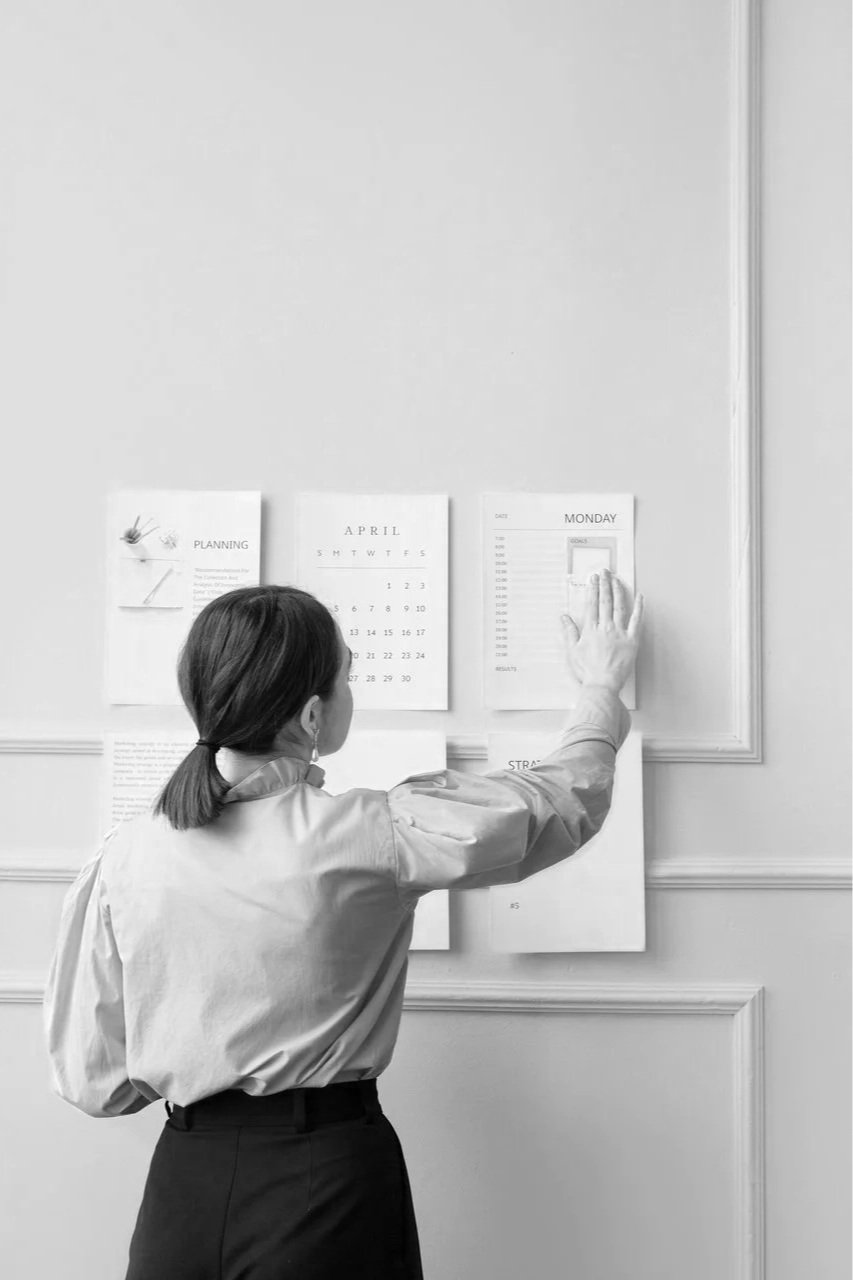
How Heavy Is Your Mental and Emotional Load?
How to recognise what’s weighing you down, make room for yourself, and rebuild confidence.

You wake up tired, even after a full night’s sleep. Small decisions feel harder than usual. A worry you thought you’d dealt with returns while you’re brushing your teeth, followed by a conversation from last week and something you still haven’t had time to address.
From the outside, you look fine. Inside, it feels like carrying a bag that gets a little heavier every day.
You may not have become less capable. You may be carrying more than you’ve recognised — and trying to function without enough time, support, or space to recover.
This is a pattern I often notice in my work with capable, high-achieving women. They wonder why they’re second-guessing themselves, losing patience, or finding ordinary tasks difficult. Yet they rarely stop to consider just how much they’re managing.
What is your mental and emotional load?
I use “mental and emotional load” to describe the combined demands you’re carrying: the practical responsibilities you’re keeping track of, the planning and anticipating involved in daily life, and the worries, feelings, and experiences that still affect you.
It isn’t a diagnosis. It’s a way of making something hard to describe more visible.
Your load might include the obvious things, such as work deadlines, money concerns, or caring responsibilities. It can also include what other people don’t see:
Remembering what needs doing before anyone asks.
Anticipating other people’s needs or reactions.
Replaying difficult conversations.
Worrying about someone you love.
Feeling responsible for keeping everyone happy.
Managing uncertainty, grief, or relationship strain.
Trying to meet expectations you haven’t stopped to question.
Each demand adds something to the bag. You may barely notice the individual additions — until carrying it starts to affect everything else.
Invisible doesn’t mean weightless.
It isn’t only adults who carry a load
Although this post focuses on adults, it’s worth remembering that children carry mental and emotional burdens too. School pressures, friendship difficulties, bullying, family changes, and worries about belonging can all feel significant. Their concerns may look smaller from an adult perspective, but that doesn’t make them small to the child experiencing them.
Children need support with what they’re carrying, not the expectation that they should manage it like adults.
Not everything you carry is negative
Some of the things that ask the most of you are things you genuinely want.
A promotion, a new relationship, a wedding, becoming a parent, or moving into a home you love can bring happiness and meaning — while also requiring decisions, planning, emotional energy, and adjustment. Welcome changes can be demanding too.
You can feel grateful and stretched at the same time. Enjoying something doesn’t mean it takes no effort, and needing a break doesn’t mean you don’t appreciate it.
Your capacity isn’t fixed, but it isn’t unlimited either. What feels manageable depends partly on the demands you’re facing and the resources available to you. Stress can build when those demands exceed what you feel able to manage.
It isn’t a simple equation where enough positive experiences cancel out difficult ones. A life can contain love, opportunity, and enjoyment while still asking too much of you at once.
The question isn’t simply, “Is my life good or bad?” It’s:
“How much am I carrying, what is it asking of me, and do I have enough support and recovery?”
The aim isn’t to remove every responsibility or avoid every challenge. It’s to make room for what matters without repeatedly stretching yourself beyond what feels sustainable.
Why a heavy load can affect confidence
When you’re stretched, confidence can become harder to access.
You might second-guess decisions you’d usually make easily, struggle to organise your thoughts, or interpret tiredness as evidence that you’re no longer coping.
Research offers one example of how circumstances can affect the mental resources available to us. In a 2013 study, Anandi Mani and colleagues found that sugarcane farmers performed worse on cognitive tasks before harvest, when money was tighter, than after harvest. The authors suggested that financial concerns were consuming resources needed for other tasks.
This wasn’t a study of confidence or every kind of mental and emotional burden. But it illustrates an important point: struggling to think clearly under pressure doesn’t necessarily mean your underlying ability has changed.
You might notice a cycle like this:
You’re carrying several demands at once.
Concentration, patience, or decision-making feels harder.
You criticise yourself for not coping better.
You work harder, hide the difficulty, or avoid asking for help.
The load increases.
The useful question may not be, “Why aren’t I more confident?”
It may be, “What am I expecting myself to manage without enough support?”
Eight areas to check
1. Emotional and psychological load
Worries, grief, fears, self-criticism, or experiences that still affect you.
You might be managing feelings you haven’t had space to acknowledge, or supporting others while putting your own needs aside.
2. Mental load
Remembering, anticipating, planning, deciding, and keeping track.
This may include appointments, household needs, unfinished tasks, or the constant background question: “What have I forgotten?”
It can also include rumination — replaying conversations or trying to think your way towards certainty.
3. Time load
Juggling schedules, deadlines, and competing priorities.
You may technically have time off while still being responsible for organising what happens during it.
4. Financial load
Concerns about income, bills, debt, budgeting, or future security.
Sometimes the pressure comes from not having enough. Sometimes it comes from uncertainty or feeling responsible for everyone else’s financial wellbeing.
5. Work load
Projects, deadlines, difficult relationships, managing others, or running a business.
Consider the expectations around your work as well as the tasks themselves. Are you expected to be available, agreeable, or able to absorb whatever comes next?
Even work you love can become demanding when there’s too much of it or too little support.
6. Relationship and caring load
Children, a partner, ageing parents, friendships, or other caring responsibilities.
You might also be managing conflict, anticipating needs, or feeling responsible for everyone’s emotional wellbeing.
These relationships may be among the most rewarding parts of your life. That doesn’t mean the responsibility involved is effortless.
7. Health load
Physical or mental-health concerns, appointments, treatment, pain, fatigue, or the work involved in looking after yourself.
Managing your health can be demanding in its own right.
8. Environmental load
Noise, clutter, unsuitable housing, lack of privacy, difficult living arrangements, or not having somewhere you can comfortably rest.
Your surroundings may add demands rather than offer relief. Even a welcome house move can temporarily bring extra planning, disruption, and decisions.
Ask Yourself?
Which area feels heaviest?
Which responsibilities are least visible to other people?
Which demands feel meaningful, and which feel unsustainable?
What genuinely needs to be mine?
What could be shared, reduced, postponed, or stopped?
Where do I need practical help rather than another coping strategy?
You may assume work is the problem, then realise it’s the planning, relationship strain, or lack of recovery around it that feels most demanding.
Your emotions deserve attention, not judgement
Emotions can offer information about what matters, what feels difficult, or where you need support.
They aren’t always accurate instructions, and they don’t all mean you’re unsafe. Feeling anxious doesn’t necessarily mean something bad will happen. Feeling guilty doesn’t automatically mean you’ve done something wrong.
You can notice a feeling without judging it, acting on it immediately, or needing to work out its entire history.
Putting feelings into words may help. In a 2007 brain-imaging study, labelling the emotions shown in images was associated with a reduced amygdala response compared with certain other tasks. That doesn’t mean naming a feeling will always make it disappear, but it provides some support for the usefulness of emotional labelling.
You might try:
“I’m disappointed.”
“I’m worried about letting someone down.”
“I’m excited about this, and I’m finding it demanding.”
“I’m tired, and this feels harder because I’m tired.”
“I need support with this.”
You don’t have to process every feeling perfectly. Sometimes recognising it is enough for the moment.
Give feelings room — without putting them on a timer
You may have heard that an emotion lasts only 90 seconds unless you keep it going with your thoughts.
In reality, feelings don’t follow one timetable. Research finds that emotions can last from seconds to hours or longer, depending on factors such as the event, its significance, and the person’s responses.
Some feelings pass quickly. Others return because the situation is ongoing, the experience matters deeply, or you need more support.
Rather than asking, “Why haven’t I got over this yet?” try:
“What would help me meet this moment?”
That might mean taking a break, talking to someone, addressing a practical problem, or seeking professional support.
You don’t have to make a feeling disappear for your response to be useful.
Check your capacity: the traffic-light system
A traffic-light check-in can help you notice how you’re doing before you reach the point of overwhelm.
This isn’t a clinical map of your nervous system. It’s a simple reflection tool.
Green: you have room
You have enough capacity to think, connect, and respond. You may still be busy or have difficult feelings, but you don’t feel completely consumed by them.
Amber: demands are building
You might feel tense, rushed, distracted, less patient, or more sensitive to small frustrations.
Perhaps your jaw tightens, you start making mistakes, or everything begins to feel urgent.
Red: you’re overwhelmed
You may feel highly distressed or unable to take in anything else.
That might look like snapping, crying, or wanting to escape. For someone else, it may feel quieter: withdrawing, feeling numb, or struggling to engage.
The aim isn’t to stay in green all day.
It’s to notice when you need a pause, support, a boundary, or a change in what’s being asked of you.
Ask:
“What am I noticing?”
“What do I need right now?”
“What would reduce the demand, rather than just help me endure it?”
Notice small moments of relief
Therapist Deb Dana uses the word glimmers for small moments of connection, comfort, or ease.
You might notice sunlight on the kitchen wall, your dog greeting you, or a message from someone who understands.
These moments don’t cancel out difficult circumstances, and you don’t have to feel better on demand.
They can simply remind you that a hard day may contain something nourishing too.
If it feels helpful, pause for a moment when one happens. You might write it down, mention it to someone, or let yourself enjoy it without turning it into another task.
How to start lightening your load
You don’t need to change all eight areas at once. Start where a small adjustment could offer meaningful relief.
1. Make the load visible
Write down what you’re carrying, including the remembering, planning, worrying, and emotional responsibility.
Include the welcome demands too. You’re not creating a list of everything wrong with your life — you’re recognising what requires something from you.
Seeing it on paper can help you describe the situation more clearly, to yourself and to other people.
2. Choose one area
You don’t have to begin with the biggest or most complicated problem.
Ask:
“Where could one realistic change make this week more manageable?”
That might be rearranging a deadline, asking someone to take over an appointment, or having one honest conversation.
3. Share ownership, not just individual tasks
Asking someone to “help” can still leave you responsible for noticing, planning, reminding, and checking.
Where possible, discuss whether they can take ownership of an area from beginning to end.
Instead of:
“Can you help with the appointment?”
Try:
“Can you take responsibility for booking it, arranging transport, and keeping track of what needs to happen afterwards?”
4. Decide what can remain unfinished
Not everything needs the same standard or the same deadline.
Ask:
“What would be enough here?”
“What genuinely happens if this waits?”
“Am I responding to a real requirement or an expectation I’ve placed on myself?”
Doing something less perfectly isn’t the same as neglecting what matters.
5. Separate action from repeated thinking
If there’s a practical step available, write it down and decide when you’ll take it.
If you’re revisiting something without gaining new information, notice that. You might say:
“I’ve considered this. Another replay isn’t giving me anything new.”
You can then redirect your attention without pretending the concern doesn’t matter.
6. Find a pause that suits you
If breathing exercises feel comfortable, try a few unforced, slower breaths.
If focusing on your breath makes you more uncomfortable, look around the room, move, or connect with someone instead.
You don’t have to perform relaxation correctly. The aim is to give yourself a little room to notice what you need.
7. Question the expectation that you must cope alone
You might be used to being the capable one, the organiser, or the person who doesn’t make a fuss.
Ask:
“What am I afraid would happen if I said this is too much?”
You don’t have to act on the answer immediately. But it may help you understand why asking for support feels difficult.
8. Check whether your circumstances need to change
Not every heavy load can be solved with self-care.
An unreasonable workload, unequal responsibilities, financial insecurity, or an unsafe relationship may require practical advice, outside support, or changes beyond your individual coping skills.
You deserve help with the circumstances, not just instructions for managing your reaction to them.
How RTT hypnotherapy can fit into lightening your load
Sometimes reducing the practical demands isn’t the whole picture.
You may also be carrying expectations such as:
I have to cope alone.
Everyone else comes first.
Rest has to be earned.
If I say no, I’ll disappoint people.
My needs are less important.
If I stop managing everything, something will go wrong.
My RTT approach is active and solution-focused.
We begin by identifying what you’d like to feel or do differently — perhaps asking for support, setting a boundary, resting with less guilt, or responding to pressure with less self-criticism.
Using hypnosis, guided reflection, imagery, and personalised suggestions, we explore relevant beliefs and practise more supportive responses.
We may consider past experiences, without assuming there’s one original memory that explains everything. Hypnosis isn’t a reliable way to verify memories or establish an exact historical cause.
Your personalised recording supports the work between sessions, alongside practical changes we identify together.
For example, you might work towards:
“I can care about people without taking responsibility for everything.”
“I’m allowed to ask for support before I reach my limit.”
“Rest doesn’t have to be a reward for exhaustion.”
“I can appreciate my life and still need a break.”
“My needs belong in the conversation too.”
Outcomes vary, and we’ll consider whether RTT is appropriate for your needs or whether another form of support would be more suitable.
The aim isn’t to help you carry an unreasonable load more quietly.
It’s to support greater choice about what you carry, what you share, and how you respond to yourself.
When to seek more support
If exhaustion, low mood, anxiety, or difficulty functioning persists, speak with your GP or a qualified mental-health professional.
Not every symptom is explained by your mental and emotional load, and you deserve support that considers the full picture.
If practical pressures are central, support may also involve workplace adjustments, financial advice, caring services, or a conversation about how responsibilities are divided.
You don’t need to wait until you’re unable to cope before asking.
A closing thought
You don’t have to become better at carrying everything.
Some of what you carry may be difficult. Some may be meaningful, exciting, or deeply loved. Either way, you still need support and room to recover.
Sometimes confidence begins with recognising how much you’re managing, questioning what’s been left with you, and allowing more help into your life.
You can start with one thing: one responsibility to share, one expectation to reconsider, or one honest conversation about what you need.
Making room for yourself matters too.
If you’d like support exploring the beliefs that make it difficult to put some of the load down, you’re welcome to book a first call with me.
Maria x
You Might also Like These Blogs
Emotional Labour: The Invisible Work That’s Exhausting You
The People You Keep Close Are Shaping How You Feel
Are You Subconsciously More Comfortable with Struggle Than Ease?

I’m Maria — a Clinical RTT Hypnotherapist and Confidence Coach working online with professional women worldwide. I combine Rapid Transformational Therapy with trauma-informed coaching and nervous system regulation, going directly to the subconscious root of self-doubt, anxiety and the patterns that keep brilliant women stuck.
If something in this post resonated, a first call is a relaxed, no-obligation conversation about where you are and whether this work is the right fit.