Why Appearance Anxiety Isn’t Vanity — and How to Find Your Confidence Again
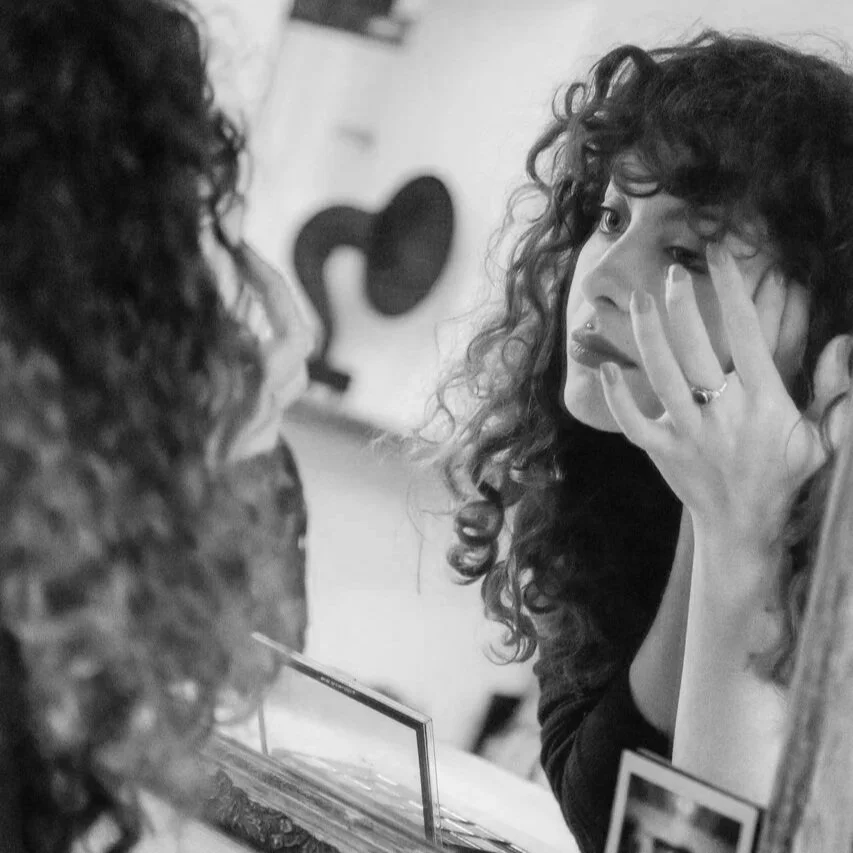
Appearance anxiety is that persistent worry or discomfort about how you look. It's not vanity, and it's not just disliking one feature. It's a felt sense that your appearance is being judged, found lacking, or isn't good enough — and it can sit underneath everything from what you wear to how freely you show up in your own life.
If this sounds familiar, you're far from alone in it. Here's where it tends to come from, how it can show up in your life, and what really helps.
What Appearance Anxiety Can Feel Like
Checking mirrors or reflective surfaces repeatedly, then feeling worse afterwards
Avoiding photos, or picking yourself apart in every one you do appear in
Spending a long time getting ready, and still leaving the house feeling unsettled
Comparing yourself to other people, almost involuntarily, in rooms, online, anywhere
Avoiding situations — swimming, certain clothes, intimacy, being photographed — because of how you might look
A running internal commentary about your appearance that rarely, if ever, turns off
It Isn't Only About Your Body
Appearance anxiety gets talked about mostly in terms of weight and shape, but it can attach to almost anything — skin, hair, height, visible ageing, a scar, a feature you've never liked, the way your face looks when you're tired. The specific target changes from person to person. The underlying belief — that this particular thing about you isn't acceptable — tends to be the same.
Skin: texture, acne, scarring, visible veins or redness
Hair: thinning, greying, texture, or hair loss
Facial features: nose, teeth, jawline, or asymmetry
Ageing: lines, volume loss, or changes that feel sudden even when they aren't
Height, body shape, or proportions that don't match a particular ideal
Where Appearance Anxiety Can Come From
Cultural and Media Beauty Standards
Social media plays a big part here. Filtered, curated, algorithm-picked images create a visual standard that was never realistic to begin with, and research on social comparison shows that seeing idealised images over and over is linked to lower body satisfaction — especially when the comparison happens passively, which is pretty much what scrolling encourages.
Bullying and Appearance Teasing
Being teased or bullied about appearance, especially during childhood or adolescence, is one of the most consistently documented contributors to body image struggles later in life. Research on childhood teasing has found that appearance-related teasing specifically predicts body dissatisfaction and disordered eating patterns well into adulthood — not because the comment itself was necessarily cruel, but because it landed at a stage when a child is actively forming beliefs about their own worth.
Childhood Emotional Neglect and Trauma
Childhood emotional neglect (CEN) — where a child's emotional needs go consistently unmet, even in an otherwise "fine" household — has been linked, in a meta-analysis of 40 studies, to higher rates of body dissatisfaction in adulthood. One likely explanation: a child who doesn't get consistent emotional attunement can learn to focus on something more controllable instead — appearance — as a stand-in for the validation that wasn't reliably there.
Comparison and Rejection
Being compared to a sibling, a classmate, or a parent's own standard of attractiveness can plant a belief that outlasts the comparison itself by decades. Social comparison theory, first proposed by psychologist Leon Festinger, describes our tendency to judge ourselves against other people rather than against any fixed, objective standard — which means your sense of how you look is rarely really about your appearance at all. It's about who you happened to be measured against, and when.
Direct Comments From Family, Friends, or Partners
A single remark — about weight, a feature, or how you looked in a particular photo — can lodge itself for years, especially if it came from someone whose opinion mattered to you, or landed at a vulnerable moment. The comment itself is often long forgotten by the person who made it. The belief it created rarely is.
The Reality of "Pretty Privilege"
This part deserves honesty rather than reassurance alone: appearance bias is real, and it's documented. The attractiveness halo effect — the tendency to unconsciously assume other positive qualities (competence, trustworthiness, intelligence) in people perceived as attractive — has been studied extensively, including in hiring. One widely cited study found candidates perceived as more attractive got callbacks at a notably higher rate than otherwise-identical candidates judged less attractive (around 10.3% versus 7.6% in that research).
A more recent 2025 meta-analysis spanning 67 studies found the effect is real, but a lot smaller and more context-dependent than earlier research suggested — it varies a good deal by industry, role, and what exactly was being judged. So here's the honest middle ground: appearance bias exists and shapes some outcomes, but it's rarely as large, as fixed, or as decisive as appearance anxiety tends to insist it is.
The Difference Between Appearance Anxiety and Reality
Appearance anxiety has a built-in distortion: it treats your own perceived flaws as glaringly obvious and constantly scrutinised by everyone around you. In reality, almost everyone else is far too busy with their own self-consciousness to study yours as closely as you'd imagine. This doesn't mean appearance bias isn't real — the research above shows it is. It means the degree, frequency, and certainty with which appearance anxiety tells you that you're being judged is usually way out of proportion to what's really happening in the room.
How It Can Affect Quality of Life
Relationships: difficulty receiving compliments, discomfort with physical intimacy, or assuming a partner's attraction will fade
Friendships: avoiding photos or social events, or feeling quietly "less than" in group settings
Work: holding back in meetings, avoiding video calls, or under-selling your own capability because you're preoccupied with how you look while doing it
Health: avoiding exercise, medical checkups, or situations that expose the body, out of self-consciousness rather than any health reason
Confidence: a baseline hesitancy that colours how freely you speak, move, and take up opportunities
Mood: a low hum of self-criticism that drains energy even on otherwise good days
Left unaddressed, appearance anxiety tends to create its own avoidance cycle: you avoid the situation that triggers the discomfort, that brings short-term relief, the relief reinforces the avoidance, and your life shrinks a little further each time.
Practical Ways to Begin Rebuilding Confidence
1. Separate a Thought From a Fact
"I look tired" is a thought. "Everyone noticed and judged it" is an assumption your anxiety tacked on top. Learning to pause between the two is often where real change starts.
It helps to know your brain isn't a neutral observer here. Confirmation bias — first described by psychologist Peter Wason, and reviewed in depth by Raymond Nickerson in 1998 — is our habit of noticing evidence that fits what we already believe and quietly dropping what doesn't. If you believe you're not attractive enough, you'll spot the odd glance, the unflattering photo, the passing comment, and miss the compliment, the warm look, the person who simply likes being around you. A thought feeling true isn't proof that it is.
2. Notice Your Appearance-Checking Habits
Mirror checking, photo scrutiny, and repeated reassurance-seeking feel like they calm the anxiety down. Research on checking behaviours suggests they usually do the opposite over time — they keep the spotlight on the very thing you're trying to feel less anxious about.
3. Curate What You Consume
Notice which accounts, shows, or images leave you feeling worse about yourself afterwards, and treat that as useful information instead of something to push through.
4. Practise Appearance Neutrality
You don't have to force yourself to love every part of how you look. Neutrality — "this is just how I look today" — is often a more realistic and more sustainable goal than forced positivity, and it's usually the one that really sticks.
5. Build Confidence Outside Your Appearance
Put time into things that have nothing to do with how you look — competence, creativity, relationships, movement for enjoyment rather than appearance. A sense of self that isn't entirely anchored to appearance is a far steadier one to stand on.
6. Respond to Old Comments With Self-Compassion
If a specific comment from years ago still echoes, it can help to answer it now, as the adult you are today, rather than leaving it to run unexamined in the background.
7. Be Discerning About Who You Spend Time With
The people around you shape how you see yourself more than you'd think. Research on "fat talk" (Salk and Engeln-Maddox, 2011) found that regular self-critical body talk among friends is linked to higher body dissatisfaction, and it spreads quietly, one "ugh, I look awful" at a time. Notice who leaves you feeling judged or on edge about your looks, and who lets you relax. You don't have to cut anyone off, but you can spend more time with the people who make you feel at ease, and gently steer or step away from appearance-heavy conversations.
It's harder if you work somewhere looks are part of the job, like modelling, acting, beauty, media, hospitality, or sales. You can't always change the environment, so focus on what you can: keep one or two people you can be completely unfiltered with, set small boundaries around comments about your body, and keep your own value separate from how the industry rates you.
Where RTT Hypnotherapy May Fit
Appearance anxiety is rarely just about appearance. It's usually a belief formed at a specific moment — a comment, a comparison, a period of bullying, a gap in emotional support — that got filed away as fact and has been quietly running the show ever since. RTT (Rapid Transformational Therapy) goes straight to where that belief was formed and updates it at the root, instead of layering positive self-talk over a belief that hasn't moved.
RTT can help address underlying beliefs such as:
"I'm not acceptable unless I look a certain way"
"People will judge or reject me because of how I look"
"My worth is tied to my appearance"
"I have to be flawless to be loved or respected"
And reinforce new ones, such as:
"My worth isn't dependent on how I look"
"I'm allowed to show up fully, even on the days I feel self-conscious"
"I don't have to earn the right to be here, just as I am"
The Shift
Appearance anxiety can feel like the most permanent, most obvious thing about you — but it's a belief, formed at a particular point, under particular circumstances. And beliefs that got formed can get unformed. You're allowed to show up fully on the days you feel beautiful, and on the days you don't.
Maria x
Frequently Asked Questions
What is appearance anxiety?
Appearance anxiety is persistent worry, distress, or self-consciousness about how you look. It can attach to weight and shape, but also to skin, hair, ageing, or almost any feature, and it often involves checking behaviours, avoidance, and a belief that you're being closely judged by others.
Is appearance anxiety the same as body dysmorphia?
Not necessarily. Appearance anxiety sits on a spectrum, from everyday self-consciousness through to clinical body dysmorphic disorder (BDD), which involves more severe, intrusive preoccupation that seriously disrupts daily life. If appearance-related thoughts are intrusive, constant, and getting in the way of your day-to-day, it's worth speaking with a doctor or mental health professional to see where you sit on that spectrum.
What causes appearance anxiety?
Common contributors include childhood teasing or bullying about appearance, childhood emotional neglect, comparison to siblings or peers, direct comments from family or partners, and exposure to idealised images through media and social media. It's rarely one single cause.
Is "pretty privilege" really real?
There's genuine research support for an attractiveness bias in areas like hiring, though a 2025 meta-analysis of 67 studies found the effect is smaller and more context-dependent than earlier, more widely cited research suggested. It's real, but appearance anxiety tends to overestimate both its size and how often it applies.
Can social media make appearance anxiety worse?
Yes. Research on social comparison consistently links seeing filtered, curated images often with lower body satisfaction — especially with passive scrolling rather than actively engaging.
How can I start feeling better about how I look?
Practical starting points include separating thoughts from facts, reducing mirror-checking and reassurance-seeking, curating what you consume, choosing who you spend time with, aiming for appearance neutrality rather than forced positivity, and building a sense of self that includes things beyond appearance.
Can hypnotherapy help with appearance anxiety?
RTT hypnotherapy can be effective because it works at the root belief driving the anxiety — often formed through a specific comment, comparison, or experience — rather than only addressing the surface-level thoughts about appearance.
How is appearance anxiety different from vanity?
Vanity implies excessive pride in appearance. Appearance anxiety is the opposite experience — persistent worry, self-criticism, and a felt sense of not being good enough — and it often coexists with genuinely low self-esteem rather than any excess of it.
Learn more about RTT Hypnotherapy for Body Image here
You Might also Like These Blogs
Does Your Mood Change the Way You See Your Body?
Is Your Self-Image Keeping You Stuck?
Your inner critic isn’t trying to destroy you. It’s trying to protect you.

I’m Maria — a Clinical RTT Hypnotherapist and Confidence Coach working online with professional women worldwide. I combine Rapid Transformational Therapy with trauma-informed coaching and nervous system regulation, going directly to the subconscious root of self-doubt, anxiety and the patterns that keep brilliant women stuck.
If something in this post resonated, a first call is a relaxed, no-obligation conversation about where you are and whether this work is the right fit.



If peaceful sleep feels out of reach, you're far from alone. Discover why an overactive mind at bedtime isn't a flaw, what's really keeping your nervous system on alert, and the practical steps — including how RTT hypnotherapy can help — that make it possible to finally switch off