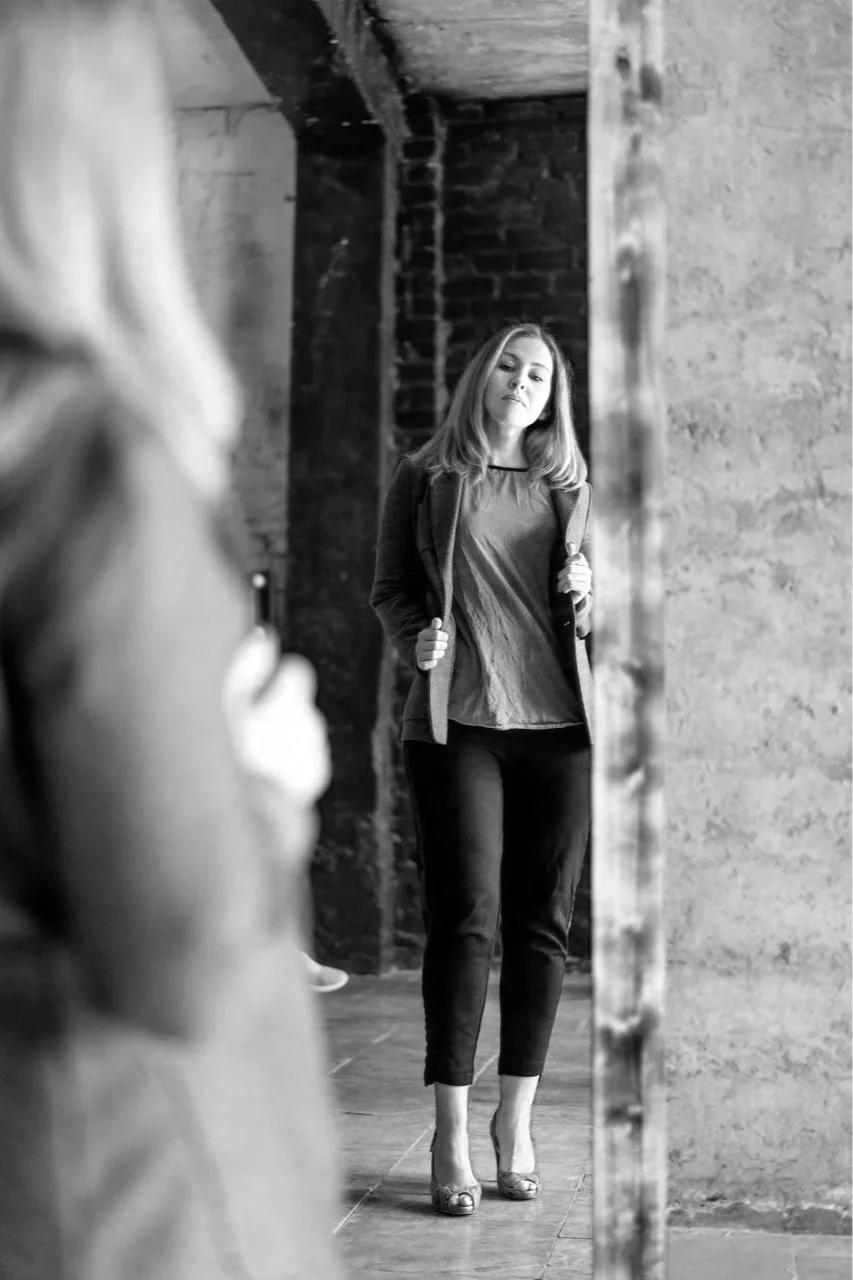
Beyond the diet cycle: how past experiences and ongoing stress can shape eating, body image, and feelings of safety — and where change can begin.

In my last post, How Hypnotherapy Can Help You Break the Diet Cycle ( link below) I wrote about the exhausting loop of restriction, rebound eating, and shame — and why another set of rules may not address everything that keeps it going.
This post takes that conversation a little further.
Sometimes, the difficulty isn’t only about what you eat or how much you restrict. It’s about what happens when you feel criticised, lonely, overwhelmed, or exposed. It may also be about how you feel when your body changes and other people begin to notice.
Research has found associations between childhood maltreatment and adult obesity, and between trauma-related symptoms and certain eating difficulties. Those findings give us a reason to consider someone’s experiences alongside their eating and physical health — not to assume that their weight reveals a trauma history.
You don’t need to search your past for something terrible. And difficulty maintaining weight loss doesn’t mean you’re resisting change. The body’s responses to weight loss can make regain more likely without any hidden emotional cause.
But if eating, body image, or being noticed brings up feelings you can’t quite make sense of, those feelings deserve attention too.
Not another reason to blame yourself. Another part of your experience that deserves care.
What the research tells us about trauma and weight
The connection between difficult experiences and later weight isn’t simply an idea from the therapy room. Researchers have been studying it for years.
In a 2014 review, Erik Hemmingsson and colleagues combined 23 studies involving more than 112,000 people. Adults who reported childhood abuse had approximately 34% higher odds of obesity than those who didn’t. That describes a difference between groups, not a prediction about any one person or proof of what caused their weight gain.
A separate review by Andrea Danese and M. Tan brought together 41 studies involving more than 190,000 participants and found a similar association. In studies that accounted for current depression, the association wasn’t statistically significant. That suggests low mood deserves attention within the picture, but it doesn’t establish that depression explains the whole connection.
Susan Mason and colleagues also studied nearly 50,000 women in the Nurses’ Health Study II. More reported lifetime PTSD symptoms were associated with a higher prevalence of eating difficulties measured using a modified “food addiction” scale. The study didn’t test treatment or show that resolving trauma produces weight loss.
Together, these findings support asking about emotional wellbeing when someone is struggling with eating or weight.
They don’t tell us that every larger body carries trauma, or that changing an emotional pattern will necessarily change body size.
You don’t have to call your past traumatic to talk about its effects
Perhaps there’s an experience you already know has affected you.
Bullying. A controlling relationship. Unwanted attention. Repeated comments about your appearance. A period when you felt frightened, alone, or unable to ask for help.
Or perhaps there isn’t one obvious event. You simply notice that certain situations bring a familiar feeling: shame when you’re watched eating, unease when someone compliments your body, or a strong urge to comfort yourself after criticism.
You don’t have to decide what label belongs to your experience before talking about it.
And you don’t have to uncover a forgotten memory before change can begin. Hypnosis isn’t a reliable way to verify memories or establish the exact historical cause of a current difficulty. Something that feels vivid during hypnotherapy shouldn’t automatically be treated as a factual record.
We can begin with what you know now: what feels difficult, when it happens, and what you’d like to be different.
When food becomes a reliable source of relief
In the first post, we looked at how food can become comfort, reward, connection, or a welcome pause.
Here, the question is whether that comfort has become particularly important when you feel distressed.
Perhaps the urge to eat arrives after a conversation that leaves you feeling small. Perhaps it comes when you finally stop being busy and uncomfortable thoughts catch up with you. Perhaps eating briefly changes how you feel when nothing else seems available.
Research suggests that trauma-related distress and eating difficulties can become connected, although there isn’t one pathway that explains everyone’s experience.
That doesn’t make comfort eating a character flaw. Nor does it mean every comforting meal is a problem.
The question is whether the pattern is causing distress, feels difficult to choose differently, or has become your only dependable way to get through certain feelings.
Rather than asking only, “How do I stop?”, you might also ask:
“What does this moment give me?”
And:
“What am I missing before I get here?”
Can stress make it harder to manage weight?
Stress can affect more than your mood. It can influence appetite, eating behaviour, sleep, and the hormonal systems involved in energy regulation. For some people, these processes may contribute to weight gain or make weight management more difficult.
Cortisol is one part of that picture.
It’s a normal, necessary hormone that helps your body respond to demands. The concern isn’t that cortisol exists, but that prolonged stress can alter how the stress-response system functions. Researchers have linked aspects of this system with abdominal fat accumulation, although the relationship is complicated and can work in both directions.
In a study led by Elissa Epel, women with more centrally distributed body fat showed stronger cortisol responses to stressful tasks. That supported a connection between stress reactivity and abdominal fat, but it couldn’t establish which came first.
There’s an important distinction here: trauma doesn’t always mean high cortisol. Studies of PTSD have found different patterns, including lower levels in some circumstances. So “trauma raises cortisol and makes your body hold on to weight” is too simple an explanation.
A more accurate way to put it is that ongoing stress may be one factor making weight management harder.
That deserves care. But it isn’t something we can diagnose from body shape, and it doesn’t mean your body is refusing to change until you’ve healed.
Weight regain isn’t proof of an unresolved emotional problem
This matters enough to say clearly.
After weight loss, appetite can increase and energy expenditure can fall. These biological adaptations can make maintaining a lower weight difficult, even when your effort and motivation haven’t changed.niddk.nih+1
You can understand your habits, look after your emotional wellbeing, and still experience weight regain.
That doesn’t mean the therapeutic work failed. It doesn’t mean there must be a deeper memory you haven’t found.
Otherwise, one form of self-blame — “I haven’t got enough willpower” — can quietly become another: “I haven’t healed enough.”
Your weight alone can’t tell you either of those things.
Emotional work is valuable because distress, shame, and difficult eating patterns deserve help, not because it guarantees a smaller body.
When being noticed doesn’t feel comfortable
For some women, body change brings feelings they weren’t expecting.
You may want to lose weight, yet dislike the attention that follows. A compliment might leave you exposed rather than pleased. Someone noticing your appearance may bring up memories of scrutiny, criticism, or attention you didn’t want.
It can be difficult to explain that conflict.
“How can I want this change and still feel uncomfortable when people notice?”
Both feelings can be real.
If a larger body feels less exposed to you, that’s something you can talk about without being judged. But it’s an individual experience, not an explanation we should assume from your size or weight history.
There are two different questions:
“How do I feel about being seen?”
And:
“What is influencing my weight?”
They may connect in your life, but one doesn’t automatically answer the other.
Support can focus on boundaries, unwanted attention, body image, and having more choice about how you respond. You don’t have to make weight loss the test of whether you feel safe enough.
What needs might your eating patterns be meeting?
You may have heard the term “secondary gains” used to describe benefits that accompany a difficulty, even when the difficulty itself is unwanted.
That language can sound as though someone is choosing to stay stuck. I’d rather begin with a more compassionate question:
“What need is being met here?”
Perhaps eating is your only uninterrupted break.
Perhaps shared food helps you feel close to your family.
Perhaps it offers predictable pleasure during a week that asks too much of you.
Recognising a need doesn’t mean you’ve chosen the distress that comes with the pattern. It gives you somewhere practical to begin.
If eating is your only rest, you may need more genuine opportunities to stop.
If it offers connection, you may need more support and company.
If you’re hungry after a day of restriction, you may need nourishment rather than another way to resist eating.
The aim isn’t to take comfort away. It’s to make sure you have enough care, nourishment, and support that food doesn’t have to do every job.
Where change can begin
You don’t need to understand your whole history before doing something helpful.
Notice the moments that feel difficult
If it feels useful, pay attention to what happens around distressing eating moments.
Not whether you were “good.” Not whether you followed the plan.
Ask:
Had I eaten enough earlier?
Was I tired, upset, lonely, or under pressure?
Had someone commented on my body?
What did I want this moment to offer?
What support would have made the situation easier?
If recording this makes you more preoccupied or critical of yourself, leave the exercise aside. It’s meant to offer understanding, not turn your day into another assessment.
Make room for boundaries
You’re allowed to decide that your body isn’t a topic for discussion.
You might say:
“I know you mean well, but I’d rather we didn’t talk about my weight.”
Or:
“Please don’t comment on what I’m eating.”
You don’t owe someone your history before you’re allowed to ask for respect.
Add something supportive
Instead of asking only how to remove a habit, ask what you can add.
An easier evening meal. Help with a responsibility. A conversation with someone who understands. A little time that doesn’t have to be productive.
Sometimes the most useful change happens before the urge to eat arrives.
Find a pause that suits you
You might try music, a short walk, looking around the room, or a few comfortable, unforced breaths.
These are options, not obligations. If focusing on your breath feels unpleasant, choose something else.
And they aren’t tests you need to pass before you’re allowed to eat. You can need emotional comfort and nourishment at the same time.
Begin with respect, rather than demanding body love
You don’t have to love your appearance to speak to yourself less harshly.
Perhaps the starting point is:
“My body deserves care, even while I’m finding this difficult.”
That may feel more believable than trying to force a positive feeling you don’t have yet.
When medical or specialist support matters
Emotional work belongs alongside physical healthcare, not instead of it.
Health conditions, medication, sleep, and other factors can influence weight. If your weight changes unexpectedly or you develop new symptoms, speak with your GP rather than assuming stress or past experiences explain it.
If eating regularly feels out of control, involves purging or severe restriction, or takes up a large part of your thoughts, seek an assessment from someone with eating-disorder expertise.
And if you’re experiencing significant trauma-related symptoms, there are established treatments. NICE recommends trauma-focused CBT and, in appropriate circumstances, EMDR for PTSD.
You deserve support matched to your needs. You don’t have to wait until things feel unbearable.
How RTT hypnotherapy can help
My RTT hypnotherapy and confidence-coaching work focuses on changing the beliefs, emotional responses, and habits that are causing distress — not simply describing them.
Perhaps you want less shame around food. Perhaps you want to stop treating a difficult evening as evidence that you’ve failed. Perhaps you want to feel more comfortable setting boundaries or being seen.
In hypnotherapy, I use hypnosis as part of a therapeutic process, alongside guided imagery, personalised suggestions, and practical coaching.
We look back at early experiences and the meanings you took from them to understand what may be at the root of the eating patterns you’d like to change. Perhaps food became a reliable source of comfort, being noticed felt uncomfortable, or you learned to put your own needs last. We work with those beliefs and emotional associations, with the aim of changing how you respond today.
This isn’t about analysing your past endlessly. It’s focused therapeutic work, supported by a personalised recording and practical coaching, to help you build a more comfortable relationship with food and your body. Together, we work towards the changes that matter to you — whether that’s feeling less driven to eat when you’re distressed, easing shame around food, or finding other ways to meet your need for comfort and support.
You don’t need to know exactly where the pattern began before you come. We start with what you’re experiencing and what you’d like to change, at a pace that feels manageable for you. Outcomes are individual, and hypnotherapy can sit alongside medical, nutritional, or other psychological support where needed.
You don’t have to keep approaching this through blame
In the first post, we looked at stepping out of restriction, rebound eating, and shame. Here, we’ve considered another part of the picture: whether past experiences, ongoing stress, or feelings about being seen are making your relationship with food and your body more difficult.
Neither conversation needs to end with a stricter promise to yourself.
Perhaps your next step is practical help. Perhaps it’s medical advice, support with eating difficulties, or therapeutic work with a pattern that keeps causing distress.
Whatever that looks like, you deserve care that takes more of your life into account.
You don’t have to uncover hidden trauma. You don’t have to prove you’ve tried hard enough. And you don’t have to make your body the evidence that you’re getting better.
Start with what feels difficult, what you need, and what you’d like to change.
If you’d like support with the beliefs and emotional responses affecting your relationship with food or your body, you’re welcome to book a first call with me. We can talk about what you’re experiencing and whether my approach is the right fit.
Maria x
Learn more about RTT Hypnotherapy for Body Image here
You Might also Like These Blogs
How Hypnotherapy Can Help You Break the Diet Cycle
Why Your Relationship With Food, Drink, and Exercise Isn't Calm
Self-sabotage isn’t your enemy. It’s your subconscious trying to protect you.

I’m Maria — a Clinical RTT Hypnotherapist and Confidence Coach working online with professional women worldwide. I combine Rapid Transformational Therapy with trauma-informed coaching and nervous system regulation, going directly to the subconscious root of self-doubt, anxiety and the patterns that keep brilliant women stuck.
If something in this post resonated, a first call is a relaxed, no-obligation conversation about where you are and whether this work is the right fit.