Does Your Mood Change the Way You See Your Body?
Here's why and how to make peace with your body regardless
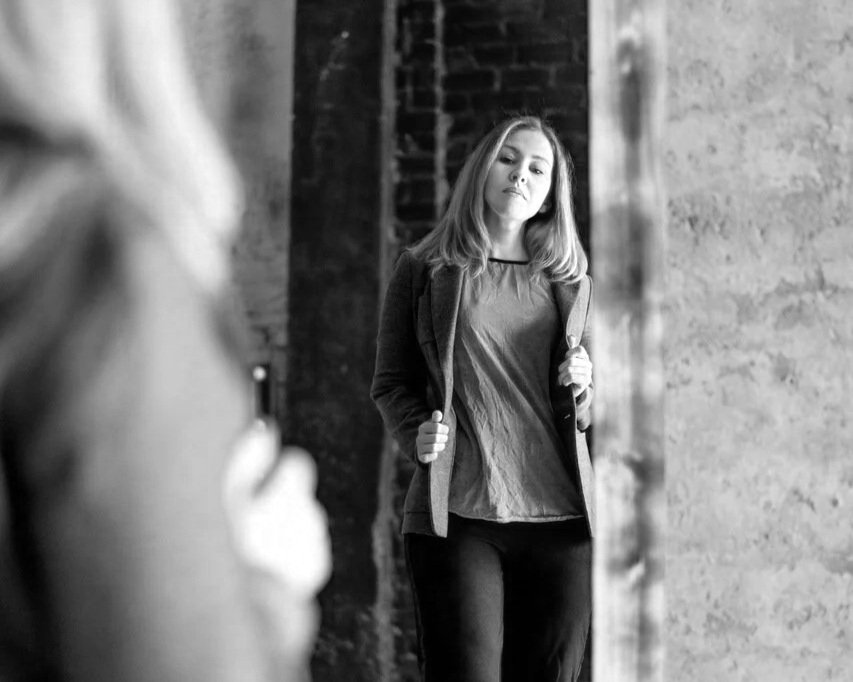
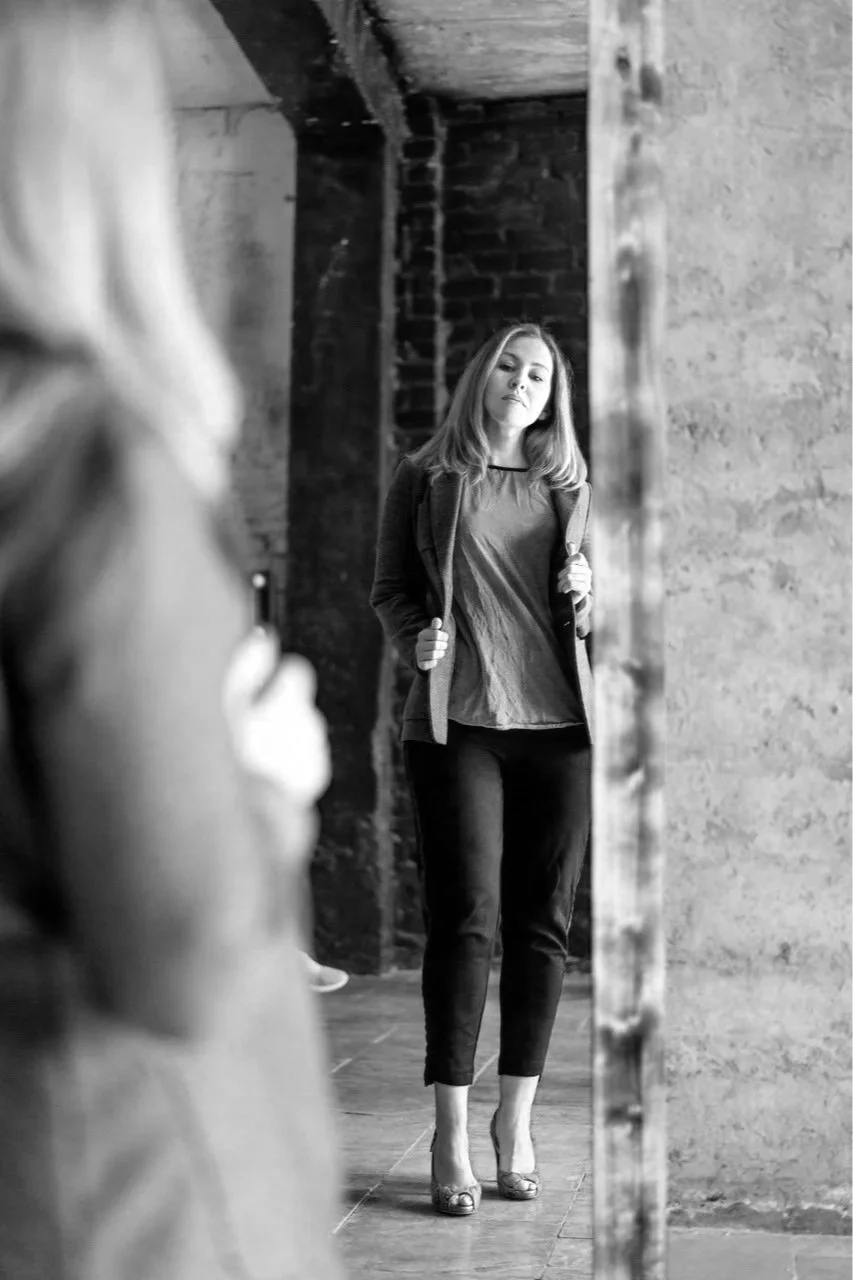
You catch your reflection one day and barely think about it. Then, a few days later, you look in the same mirror and suddenly notice everything you don’t like.
The mirror is the same. Your body hasn’t changed dramatically. So why can the reflection feel so different?
Sometimes this feeling lasts for a day. Sometimes it comes and goes over several weeks or months. You might find yourself avoiding mirrors, checking your appearance repeatedly, changing outfits several times, or feeling uncomfortable in your body even though nothing significant has changed physically.
A difficult period with your body image can feel like you’ve finally seen the truth. But often, it isn’t a more accurate reflection. It’s a reflection being interpreted through a different emotional state.
It may be your state, not your appearance
Many of us think of body image as a fixed opinion — something we either have or don’t. But the way you see your body can change with your mood, sleep, stress, hormones, relationships, and surroundings.
Body-image research suggests that how you feel about your appearance isn’t completely fixed. It can fluctuate from day to day, and sometimes from moment to moment, depending on your mood, stress, sleep, social comparisons, and the situation you’re in. Researchers have studied these changes using repeated real-life assessments, rather than asking people to describe their body image only once. This helps show that a difficult body-image period may reflect a change in your experience of yourself, not necessarily a sudden change in your body.
Researchers such as Thomas Cash helped establish the idea that body image is both a longer-term pattern and a momentary experience. In other words, you can have a general opinion about your appearance while also having short-term shifts in how you see yourself from one day or situation to the next.
That distinction matters because it changes the question. Instead of assuming, “I look worse today,” you can begin to ask, “What else might be affecting the way I’m seeing myself?”
You might be:
Tired or run down.
Stressed, overwhelmed, or close to burnout.
Recovering from a difficult conversation.
Feeling rejected, criticised, or emotionally exposed.
Comparing yourself with other people online.
Getting dressed for an event and feeling pressure to look a certain way.
Experiencing bloating, hormonal changes, or physical discomfort.
Feeling disconnected from yourself.
On those days, the mirror can become the place where a more general feeling gets expressed. Instead of noticing, “I’m tired and vulnerable today,” your mind may settle on, “I look awful.”
The feeling is real. But the conclusion may not be accurate.
Why difficult periods feel louder
There’s a reason one moment of dissatisfaction can outweigh several days or weeks of feeling comfortable enough. Negative information often carries more psychological weight than positive information.
In body-image concerns, this can show up as focusing intensely on one perceived flaw while overlooking neutral or positive aspects of your appearance. When you’re already stressed, tired, or emotionally unsettled, your attention can become more focused on what might be wrong.
One feature you don’t like gets amplified, while anything that might contradict that judgement fades into the background.
You may not see your whole face or body. You may see the one thing you’ve decided is a problem.
This can happen after looking at a photograph, trying on clothes, scrolling through social media, or catching yourself in harsh lighting. The moment becomes “evidence”, even though it only shows one angle, expression, outfit, or environment.
When your mood affects the way you see yourself
You may feel anxious, flat, rejected, exhausted, or overwhelmed, and then interpret your appearance through that feeling. A small detail becomes the main thing you can see. You may decide your whole face looks wrong because you dislike one feature, or conclude that you look terrible because you don’t feel like yourself that day.
This is sometimes described as emotional reasoning — when “I feel unattractive” starts to become “I am unattractive.” The feeling is real, but it isn’t necessarily an accurate measurement of your appearance.
Other thinking patterns can show up here, too:
All-or-nothing thinking: “I look awful” or “I look perfect”, with no room for anything in between.
Selective attention: Focusing on one feature and ignoring everything else.
Mind-reading: Assuming other people are noticing and judging the same thing.
Unfair comparison: Comparing your everyday appearance with someone else’s best angle, lighting, pose, or edited image.
Catastrophising: Treating one difficult photograph or reflection as proof that you’ll always look this way.
Naming these patterns doesn’t mean dismissing how you feel. It helps you remember that a feeling is information about your experience, not necessarily an objective measurement of your appearance.
The mirror isn’t completely neutral
Have you ever tried on the same outfit in different changing rooms, in different shops, on the same day — and felt as though you looked like a different person in each one?
You’re not imagining it. The mirror, lighting, angle, clothes, and surroundings can all affect what you notice.
A brightly lit changing room may show you something very different from a dim bathroom. An overhead light can create shadows that make you focus on lines or contours you wouldn’t notice in softer lighting. A mirror may be angled differently or positioned at a different height.
This is a small reminder of a bigger truth: the mirror isn’t a neutral instrument reporting back one objective version of you. What you see is influenced by the environment and by the state of the person looking into it.
Why this isn’t vanity
A difficult period with your body image can feel embarrassing because concerns about appearance are often dismissed as vanity. But struggling with how you look isn’t necessarily about wanting attention or being superficial.
It may be connected to shame, belonging, safety, comparison, or fear of being judged. If you’ve learned that your appearance affects how acceptable, desirable, successful, or lovable you are, it makes sense that the mirror can feel emotionally loaded.
The reflection becomes about much more than your face or body.
Research also suggests that appearance-based comparisons with peers and media images can be linked with greater body dissatisfaction and more negative body-related emotions.
You may begin to compare your real, everyday appearance with carefully selected photographs, edited images, or people whose bodies and circumstances are completely different from your own.
The comparison isn’t equal, but it can still affect the way you feel.
What this can look like
Getting dressed
You try on three outfits before leaving the house. Each one seems to highlight a different flaw, and you start believing the problem is your body rather than the clothes, lighting, fit, or mood you’re in.
After seeing photographs
You see a photograph of yourself that you don’t like and spend the rest of the day checking your face from different angles. The photograph becomes “proof” of how you really look, even though it captured one expression, one moment, and one angle.
At the gym or in a changing room
You notice another woman who appears confident and immediately compare your body with hers. You leave feeling worse, even though you arrived feeling comfortable enough.
After a difficult day
You’ve had a stressful conversation or felt rejected by someone. Later, you catch your reflection and decide you look tired, unattractive, or somehow wrong.
The mirror may be receiving the emotion that began somewhere else.
During a stressful period
You may start checking your appearance more often, asking other people how you look, avoiding photographs, or changing your clothes repeatedly. The more you check, the more uncertain you feel, and the more you feel you need to check again.
What to do when you’re struggling with your reflection
You don’t need to force yourself to believe that you look beautiful if that doesn’t feel true. The first step can simply be to create a little space between the feeling and the conclusion.
Name the feeling
Instead of immediately saying, “I look awful,” pause and ask:
Am I tired?
Am I stressed?
Have I been comparing myself with other people?
Has something happened today that has affected how I feel about myself?
Am I looking for certainty or reassurance from the mirror?
Separate the fact from the story
The fact might be:
“I don’t like how I look in this lighting.”
The story might be:
“I’m unattractive, and everyone else can see it.”
These aren’t the same thing.
Stop checking
Repeatedly looking in the mirror, taking more photographs, changing outfits, or asking for reassurance can make the feeling stronger.
If possible, make one reasonable decision about your appearance and then move on to something else. You don’t need to keep investigating yourself until you feel completely certain.
Care for your state
You may need care rather than further analysis of your appearance.
Try eating something, resting, taking a walk, having a shower, contacting someone supportive, or stepping away from social media. Sometimes the most helpful response to a harsh judgement is to look after the person having the judgement.
Use a neutral statement
You could try saying:
“This is a difficult body-image moment.”
“I’m seeing myself through a critical lens today.”
“My feelings may be affecting my perception.”
“I don’t have to solve my appearance right now.”
These statements don’t ask you to pretend. They simply give you something more balanced to respond to.
When it lasts longer than a day
Sometimes the way you see your body changes for a day or two. Sometimes it comes and goes over a week, a month, or longer.
If you’ve been feeling uncomfortable in your body for an extended period, it may be worth looking beyond the mirror. Ask yourself:
What was happening when this started?
Have I been under more stress than usual?
Am I comparing myself more often?
Have I experienced criticism, rejection, or a change in my relationships?
Am I using my appearance to measure my worth?
Am I avoiding things because I don’t feel comfortable being seen?
A longer-lasting pattern doesn’t mean your body has suddenly become the problem. It may mean that something needs attention emotionally, relationally, or practically.
If concerns about your appearance are taking up a lot of your day, affecting what you eat, stopping you from leaving the house, or leading to repeated checking and reassurance-seeking, it’s important to speak with a qualified mental-health professional. Hypnotherapy shouldn’t replace specialist support where it’s needed.
Where RTT hypnotherapy can help
For some women, body-image criticism is occasional and improves when they’re rested, supported, or less stressed. For others, it becomes a daily pattern.
You may avoid photographs, change outfits repeatedly, compare yourself constantly, or feel that your appearance determines whether you’re acceptable, safe, or lovable.
When the pattern feels deeply rooted, there may be an older belief underneath it:
I have to look a certain way to be loved.
People will reject me if they see the real me.
My appearance determines my worth.
I’m only safe when I’m attractive or in control.
RTT hypnotherapy can help you explore where these beliefs may have come from and how they’re still influencing the way you see yourself.
The aim isn’t to make you ignore your appearance or pretend you like every part of yourself. It’s to loosen the old belief that your appearance has to determine your worth.
By understanding the belief underneath the reaction, you may be able to respond differently when it appears. You can begin to see yourself more fully, rather than reducing yourself to one feature, one photograph, one outfit, or one difficult period.
The mirror doesn’t tell the whole story
The mirror can show you a reflection, but it can’t tell you the whole truth about your worth, desirability, or lovability.
Sometimes the way you see yourself is affected by tiredness, stress, comparison, or something emotionally painful. That doesn’t mean the most critical version is the real version.
Before deciding that your body is the problem, pause and ask what else you may be feeling.
You may not need to change your appearance. You may need rest, reassurance, support, or a kinder way of seeing yourself.
Maria x
Frequently Asked Questions
Is it normal for my body image to change even though my body hasn’t?
Yes. Body image is understood as both a longer-term pattern and a changing experience. It can be affected by mood, sleep, stress, hormones, relationships, lighting, clothing, and context. A difficult period with your body image doesn’t automatically mean your body has changed.
Why does one flaw seem to outweigh everything else?
Negative information can carry more psychological weight than positive information. When you’re stressed or emotionally unsettled, your attention may focus more strongly on what you perceive as a flaw, while positive or neutral information fades into the background.
Why can my mood affect the way I see my body?
When you’re tired, stressed, upset, or comparing yourself with other people, you may pay more attention to perceived flaws and interpret your appearance more negatively. This is sometimes called emotional reasoning — the feeling of looking unattractive becomes confused with proof that you are unattractive. Noticing this can help you create some space between the emotion and the conclusion.
What should I do when I don’t like how I look?
Try naming your emotional state before judging your appearance. Ask whether you’re tired, stressed, comparing yourself, or looking for reassurance. Separate the fact from the story, avoid repeated checking, and choose a neutral statement such as, “I’m seeing myself through a critical lens today.”
Can body-image concerns last longer than a day?
Yes. They can come and go over days, weeks, or months. If concerns about your appearance are affecting your eating, relationships, work, social life, or ability to leave the house, consider speaking with a qualified mental-health professional.
Can RTT hypnotherapy help with persistent body-image concerns?
RTT hypnotherapy may help explore beliefs connected to appearance, worth, lovability, safety, or being accepted. It’s not a substitute for specialist support where body-image distress is severe, but it may be used alongside appropriate professional care.
You May also Like These Blogs
Is Your Self-Image Keeping You Stuck?

I’m Maria — a Clinical RTT Hypnotherapist and Confidence Coach working online with professional women worldwide. I combine Rapid Transformational Therapy with trauma-informed coaching and nervous system regulation, going directly to the subconscious root of self-doubt, anxiety and the patterns that keep brilliant women stuck.
If something in this post resonated, a first call is a relaxed, no-obligation conversation about where you are and whether this work is the right fit.









If peaceful sleep feels out of reach, you're far from alone. Discover why an overactive mind at bedtime isn't a flaw, what's really keeping your nervous system on alert, and the practical steps — including how RTT hypnotherapy can help — that make it possible to finally switch off